My Last First Day Senior 2026 SVG: A Designer’s Practical Review
When I first opened the My Last First Day Senior 2026 SVG, I was standing in my workroom, a stack of blank tote bags folded on the shelf and a client request for a custom senior year gift sitting in my inbox. The design file arrived as a clean digital asset—part of the Print Templates and Graphics category—but I wasn’t here to print it. I was here to see if it could live as a real embroidery project, something that would hold its personality after hours of thread, stabilizer, and needlework. I’ve tested hundreds of designs this way, and I’ll walk you through exactly what I found, what I’d change, and where I’d trust it on a finished product.
First Impressions: Mood, Shape, and That Senior Year Feeling
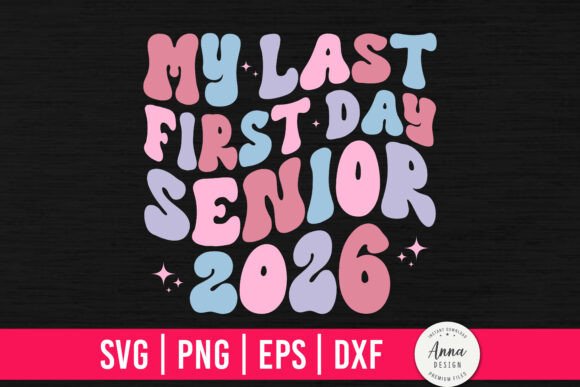
The moment I saw the layout of My Last First Day Senior 2026 SVG, I felt a blend of nostalgia and celebration. It’s not a delicate, wispy type design. The lettering carries weight, the date marks a clear milestone, and the whole composition leans into a bold, young, confident energy. As an embroidery designer, I look for that kind of personality right away. A weak shape can flatten on fabric, but this one stands up. The visual rhythm between the words and the year creates a natural focal point that would draw the eye on a sweatshirt, a tote bag, or even a patch.
I mentally placed it on a few different products. The design works best on flat or gently curved surfaces—think a medium-weight canvas tote, a crewneck sweatshirt chest, or the front of a structured pillow cover. It immediately felt like a back-to-school keepsake, the kind of thing a parent would order for a senior photoshoot prop or a boutique owner would list in early August. The shape doesn’t wander; it sits in a predictable, hoop-friendly rectangle that makes digitizing easier. I’ve seen too many SVG files with random floating elements that become a nightmare to stitch out. This one stays grounded.
Real Project Scenario: From a Tote Bag to a Lasting Memory
I chose a natural cotton tote bag as my test canvas. The idea was simple: a personalized end-of-summer gift for a high school senior, something they’d carry on the first day of their final year. I loaded the SVG into my digitizing software, not as a cutting machine file, but as a reference to map out the embroidery. The thick, clean lines of My Last First Day Senior 2026 SVG translated beautifully into a combination of satin stitch and fill stitch. I kept the lettering at a solid width, which meant I wouldn’t have to fight tiny, dense columns of thread that often pucker on lighter fabrics.
While stitching, I watched the thread color contrast carefully. On a natural beige tote, a deep navy or classic black thread made the design pop without feeling like a loud graphic. I tested a white thread version on a dark navy tote as well, and the reversal worked just as well. The visual impact stayed crisp. This is where a design earns its keep—when it doesn’t just look good on a screen, but still reads clearly after a stabilizer wash-away and a final press. I’d confidently place this on a tote bag, a canvas zipper pouch, or even a hoodie back panel.
Where It Shines in Embroidery and Small Business Use
If you’re an Etsy seller, a craft fair vendor, or a small shop owner looking for a design that feels personal but not overly niche, this one fits a sweet spot. The phrase “My Last First Day” has built-in emotional weight. It’s sentimental without being sappy, and it’s universal enough to work for a broad range of seniors. I can see it popping up on:
- Custom apparel for back-to-school boutiques
- Embroidered patches for jackets and backpacks
- Personalized pillow covers for dorm room decor
- Canvas tote bags as first-day gifts
- Aprons for a senior’s culinary class or part-time job
- Kitchen towels as a quirky keepsake for parents
From a commercial embroidery perspective, the design’s clarity helps build trust. When a customer receives a finished product with clean, readable stitching, they’re more likely to reorder and leave a positive review. My Last First Day Senior 2026 SVG is a strong design asset for that type of consistent brand presentation. It doesn’t try to be trendy; it goes for a timeless milestone statement, which means it won’t look dated by the time the senior actually graduates.
A Note on Using This as a Digital Embroidery File
You’ll notice the product description lists the file formats: svg, png, dxf, eps—all intended for cutting machines like Cricut and Silhouette. That’s important to understand. This isn’t a pre-digitized embroidery file, and it doesn’t come with stitch count, density presets, or machine formats. If you’re planning to stitch it out, you’ll need to digitize the design yourself or hire a professional digitizer. The good news is that the clean, bold typography of My Last First Day Senior 2026 SVG makes this process straightforward. There aren’t tiny filigree details or complex gradients that would require multiple thread colors and tricky underlay. I’d recommend a basic satin stitch for the lettering, with a light fill stitch on any larger open areas, and a single running stitch for an outline if you want a defined edge.
Before you commit to a full production run, check the hoop size your machine needs. The design’s width will dictate the smallest hoop that can handle it without distortion. I always test on scrap fabric first—same weight, same stabilizer, same thread brand—and then wash the sample to see how the stitches hold. I also recommend running a black-and-white mockup to see if the design loses any legibility without color. If it still reads well, you’re on solid ground.
Fabrics, Surfaces, and Where to Be Cautious
Not every project is a good fit for this design. I’d avoid using My Last First Day Senior 2026 SVG on heavily textured fabrics like thick terry cloth or loose-weave linen, because the lettering might lose definition. On stretchy fabrics, a cutaway stabilizer is non-negotiable; otherwise, the satin stitches will warp after a few wears. Baby onesies and thin t-shirts can work, but keep the design scaled down and test the stitch density so the fabric doesn’t pucker.
Caps and curved surfaces need extra thought. The design’s strong horizontal line might not curve smoothly over a structured cap front without careful digitizing. If you’re set on a hat, I’d rotate the layout or choose a patch format instead—stitch it on a flat piece of twill, then attach it to the cap. Similarly, for layered garments like zip-up hoodies, placement matters. Avoid stitching across zippers or seams, and always check the backing after the first wash. Small details, like the inside of the numbers or tight corners in the lettering, can trap thread buildup, so keep those areas clean and open in your digitizing software.
Customer Appeal, Giftability, and Brand Consistency
When I evaluate a design for my client work, I ask one question: “Will this make someone stop scrolling and feel something?” My Last First Day Senior 2026 SVG passes that test. The emotional hook is immediate. Parents, grandparents, and even the seniors themselves recognize the weight of a last first day. That kind of recognition turns a simple embroidered product into a small story. For a craft business, that’s gold. You’re not just selling a tote bag; you’re selling a keepsake for a moment that won’t come again.
I’ve found that designs with this level of personal meaning often perform well in gift guides, senior year bundles, and even as a complementary item with a matching toddler “My First Day” piece. The professional presentation of the finished product—clean stitching, no puckering, a neat interior backing—speaks directly to buyer confidence. If you’re listing this on an Etsy shop or showing it at a craft fair, pair it with a printable mockup that shows the embroidery on a real fabric background. The SVG’s crisp lines will make the mockup look polished, which helps with digital product previews.
Practical Embroidery Designer Notes
Every embroidery project has its own quirks, and this one is no different. Here’s a list of steps I always follow before I commit to a final stitch-out of any SVG-based design, including My Last First Day Senior 2026 SVG:
- Test the digitized version on a scrap of the exact fabric you’ll use for the finished product.
- Check thread color contrast on both light and dark backgrounds—white thread on pastel fabric can vanish.
- Run a black-and-white printout to see if the design still reads without color cues.
- Use the right stabilizer: cutaway for knits, tear-away for wovens, and a topping for fluffy fabrics.
- Inspect the back of the embroidery for dense thread nests; adjust stitch spacing if needed.
- Confirm the hoop size and ensure the design fits without touching the hoop edges.
- Review the licensing terms. The product description mentions print-ready files for cutting machines, but you must verify whether the resulting embroidery can be sold on finished products. If the license isn’t explicitly stated, contact the seller before using it commercially.
I also keep a small notebook of thread color combinations for each design. For My Last First Day Senior 2026 SVG, I’ve used a matte black thread on a cream tote, a bright gold on a burgundy sweatshirt, and a soft heathered gray on a white pillow cover. Each combination gave a different mood, but the design’s core message stayed strong.
Final Thoughts From the Workroom
I didn’t expect to feel this attached to a typographic design, but My Last First Day Senior 2026 SVG earned its place in my project library. It’s not a complicated, multi-layered masterpiece. It’s a clear, heartfelt statement that stitches well, sells well, and makes people smile. For embroidery designers, small shop owners, and crafters who want a reliable senior-year themed design, this one is a safe bet. Just remember: it’s a digital Graphic, not a stitch file. Put in the work to digitize it carefully, pair it with the right fabric, and you’ll end up with a finished product that feels like a small celebration in thread.