Silhouette of Family Watering a Plant: A Designer Review
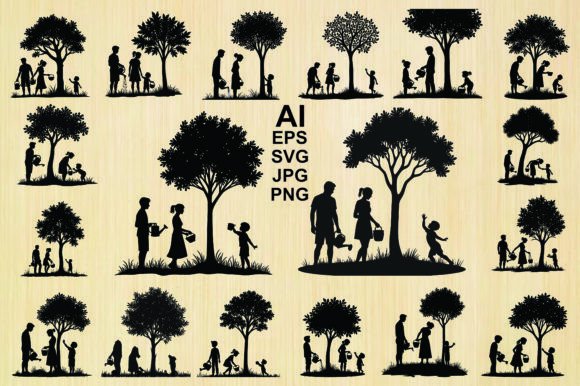
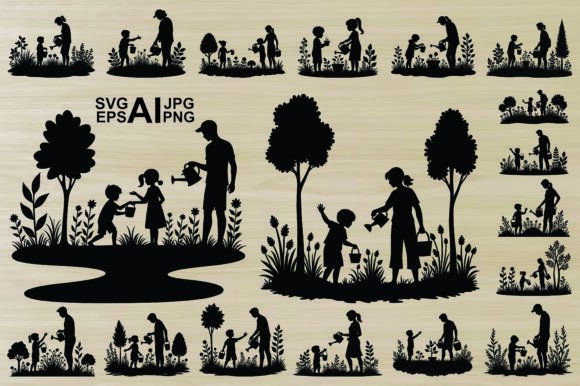
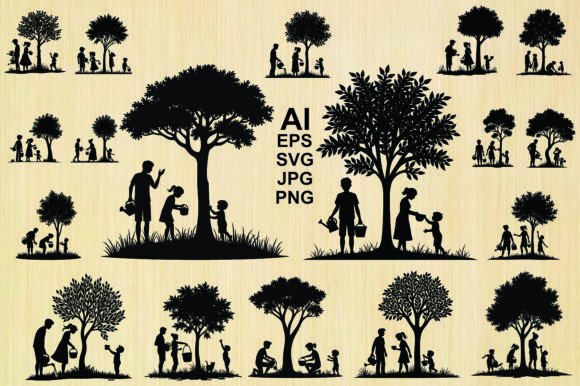
When I first pulled up the Silhouette of Family Watering a Plant graphic, I immediately saw a tender, grounded scene. Two parents and a child lean toward a young tree, a watering can tilted in one adult’s hand. The whole image feels unhurried, full of care, and very much like a moment you’d want to stitch onto something that lasts. As someone who evaluates design assets for real embroidery work, I’m never just looking at a pretty picture. I’m looking at how the shapes will hold up under thread, how the negative space will breathe on fabric, and what kind of product this design would truly belong to. This silhouette, from the Illustrations category, has a quiet strength that makes it a smart candidate for handmade goods, but only if you treat it with the right technical respect.
I’ll walk you through my honest, stitch-by-stitch thinking. No fluff, no hype—just the practical reality of taking a graphic like this and turning it into something you’d sell, gift, or wear proudly.
Imagining a Real Project: The Garden Tote That Sells a Feeling
Let’s ground this in a real scenario. I’m preparing a small batch of custom embroidered tote bags for a local plant nursery’s spring market. The client wants something that whispers “family, growth, nature” without screaming a logo. Immediately, I think of this silhouette. I picture it stitched in a deep olive green thread on a natural canvas tote—the kind of bag that carries seedlings, farmers’ market finds, or a child’s library books. The family’s curved posture, the gentle arc of the tree, and the watering can all read clearly even at a quick glance. That’s a huge checkmark for a design meant to be seen from a few feet away.
But here’s where a designer’s eye goes further. The group of figures is fairly compact, which means the overall composition will fit nicely on a bag front, a sweatshirt chest, or the center of a throw pillow without feeling cramped. The tree branches reach upward just enough to give the design a vertical lift, balancing the grounded family shapes. That balance is exactly what you want when you’re planning how the embroidery will sit on the wearer’s body or on a shelf.
Silhouette Style: Why This Design Works for Embroidery
Silhouettes are a bread-and-butter choice for machine embroidery, and this one plays to those strengths. The lack of internal detail means you’re not fighting tiny facial features, fabric texture, or intricate shading. Instead, you get a bold, graphic statement that reads like a unified shape. For an embroidery file conversion, this translates to simpler stitch types—mainly satin stitch outlines or a smooth fill stitch with a clean edge. That simplicity is a gift when you’re digitizing for different fabric weights or when you need the design to hold up after dozens of washes.
I also notice the emotional weight this image carries. A family watering a tree together instantly suggests values: nurturing, patience, togetherness. That makes it a strong candidate for personalized gifts, baby shower items, or eco-friendly brand merchandise. The mood is universal, so it doesn’t lean too feminine or masculine, and it fits a wide age range. That’s smart when you’re an Etsy seller who wants one design to appeal to many buyers.
Checking the Fine Points Before You Stitch
Even a silhouette needs a careful once-over. I zoomed in on the digital preview to see how the lines connect. The watering can’s spout and the child’s hand are close together, which on a smaller hoop could become a muddy blob if the stitch density isn’t adjusted. You’ll want to test this on scrap fabric before committing to a final product. I’d also check the tree leaves—they’re made of several small, separate shapes that, if too thin, might disappear on a textured fabric like a waffle weave towel or a fuzzy sweatshirt.
One thing I always do is run a black-and-white mockup at the actual stitch size. For Silhouette of Family Watering a Plant, I’d print it at 4 inches wide and tape it to a tote bag to see if the family members’ arms and the watering can’s handle remain distinct. So far, the design holds promise, but I’d recommend a minimum hoop size of 4x4 inches for a safe, readable outcome. Anything smaller, and you risk losing the child’s silhouette or the tree’s delicate branches.
Where This Design Shines on Real Products
I’ve mentally placed this design on a dozen different blanks, and some feel like they found their soulmate. Here’s where I’d confidently use it:
- Canvas tote bags – the go-to for garden-themed gifts and boutique merchandise.
- Unisex sweatshirts – a soft, tonal embroidery on a heather gray pullover gives an heirloom, nature-connection vibe.
- Kitchen towels – a single-color stitch on a flour-sack towel adds a handmade, farmhouse touch.
- Baby onesies – the family theme feels tender and protective, perfect for a new parent gift.
- Outdoor throw pillows – imagine this in a warm rust thread on a linen cushion, sitting on a porch chair.
- Embroidered patches – the solid silhouette makes a crisp, sew-on patch that looks great on jackets or backpacks.
For each of these, I’d choose a thread color that contrasts well with the fabric—dark on light, light on dark—to keep the silhouette crisp. A single-color design like this actually benefits from a bit of deliberate contrast, because it relies entirely on shape rather than color variation.
When You Need to Be Extra Careful
No design is a one-size-fits-all miracle. Silhouette of Family Watering a Plant will test your patience on highly textured fabrics, like thick terry cloth or a chunky knit. The tree branches and the watering can’s spout are slender; if your fabric has a deep pile, the thread can sink in and lose definition. I’d also avoid using it on extremely stretchy fabric like a thin ribbed knit unless you’re very confident with your stabilizer and hooping technique. The design’s broad, filled areas could pucker if the fabric shifts during stitching.
Darker garments need special attention, too. A black tee with black thread might sound artsy, but you’ll lose the silhouette almost entirely. If I’m going dark-on-dark, I’d use a slightly lighter shade, like charcoal thread on a black shirt, to create a subtle shadow effect. On curved surfaces like structured caps, the family’s horizontal alignment might warp. I’d test the positioning on a cap hoop carefully, perhaps moving the design slightly off-center to follow the cap’s curve.
Practical Embroidery Designer Notes
Before you load this design into your machine, here’s my non-negotiable checklist for a professional result:
- Test on scrap fabric first. Always. Use the same fabric and stabilizer you plan for the final product.
- Check thread color contrast. Hold the thread spool against the fabric in natural light to see if the silhouette pops or fades.
- Review stitch density. If you’re digitizing this graphic yourself, keep the fill stitch density moderate. Too dense, and you’ll get stiffness; too light, and the fabric peeks through.
- Confirm your hoop size. Don’t assume the file fits. Measure the design’s width and height, and give yourself at least a half-inch margin from the hoop edge.
- Inspect small details. The child’s hand, the watering can spout, and the tree’s upper leaves are the first places that lose clarity. Adjust your digitizing to slightly thicken those areas if needed.
- Test in black and white. A quick printout at the stitch size will reveal if any shapes merge into an unrecognizable mass.
- Use proper stabilizer. For woven fabrics, a medium cut-away stabilizer is a safe bet. For knits, add a topping to prevent stitches from sinking.
- Check licensing. Since this graphic is listed under Graphics as a type within Illustrations, confirm the terms allow you to sell finished embroidered items or digitized files. Never assume; always verify.
I won’t invent stitch counts or claim specific file formats because those details aren’t provided in the listing. But I will say that any reputable embroidery designer should confirm the original file type—vector or raster—and its resolution before digitizing. A vector silhouette will scale cleanly, while a low-resolution raster will need extra work. That’s a conversation worth having with the seller or checking in the product details.
The Emotional Value That Customers Notice
When you stitch Silhouette of Family Watering a Plant onto a finished product, you’re not just placing a picture. You’re stitching a story. Buyers at craft fairs pause when they see an image that feels like a memory. I’ve watched customers cradle a tea towel with a similar silhouette and say, “This reminds me of my grandmother’s garden.” That kind of reaction builds trust, repeat sales, and word-of-mouth. The design’s simplicity actually amplifies that emotional connection because it doesn’t distract with fussy details.
For a small shop product, this design can elevate the perceived value of a simple blank. A plain apron becomes a thoughtful housewarming gift. A baby blanket turns into a keepsake. The silhouette’s classic, almost storybook quality makes it suitable for holiday embroidery as well—think Mother’s Day, Father’s Day, or Earth Day promotions. It’s a quiet, versatile asset that doesn’t follow a fleeting trend, and that’s a relief for anyone managing a craft business inventory.
My Final Gut Check
After spending time with this design, I’d confidently add it to my project library. It’s not a flashy, loud graphic; it’s a gentle, sincere one. That’s exactly what works for the kind of handmade product that people want to live with every day. The family silhouette feels grounded, the tree motif is hopeful, and the watering action carries a sense of daily care. As an embroidery designer, I appreciate that the visual message is clear, the composition is compact, and the conversion to stitch is straightforward—as long as you mind the slender branches and the closeness of the figures.
If you’re a creative entrepreneur looking for a machine embroidery design asset that feels meaningful and sells on emotion, Silhouette of Family Watering a Plant deserves a spot on your test list. Just test it, tweak the small details, and pair it with the right fabric. The result will be a product that says more than a thousand words, with just a single thread color.